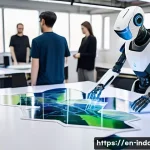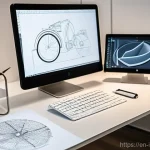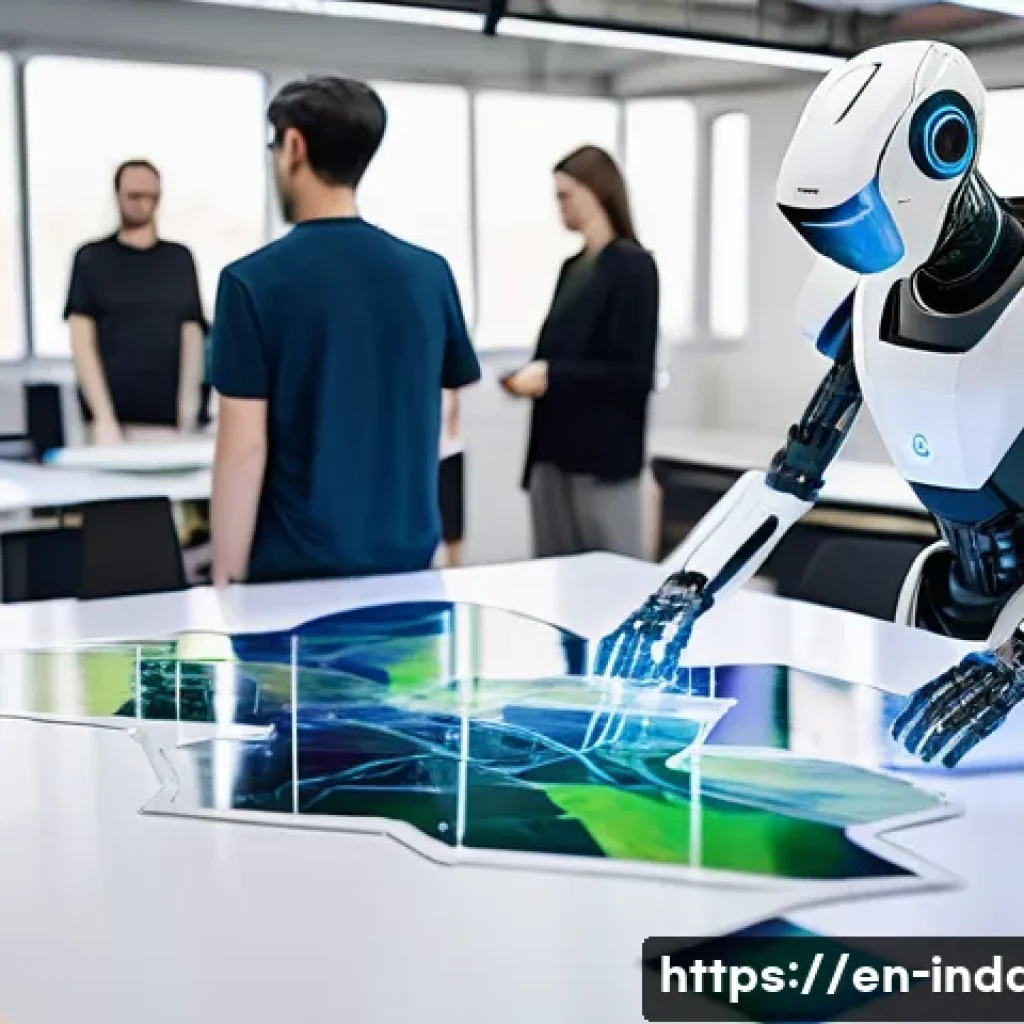
Okay, I will create a blog post introduction about industrial and robot design following all the guidelines. Industrial design is rapidly evolving, driven by artificial intelligence (AI), sustainable practices, and the seamless integration of the digital and physical worlds.
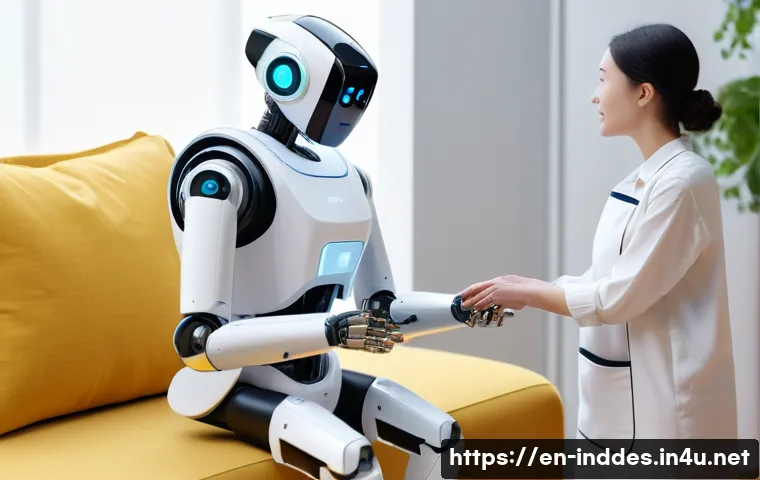
We’re seeing a shift towards regenerative design, where products not only minimize harm but actively improve environmental and social systems. Simultaneously, robot design is advancing with AI and machine learning, leading to enhanced autonomy and real-time adaptation.
These robots are no longer confined to factories but are making their way into healthcare, logistics, and even our homes. The fusion of these two fields is creating exciting possibilities.
Imagine robots designed with sustainable materials, capable of learning and adapting to our needs, and seamlessly integrating into our lives. The trends of human-centered design are becoming even more critical, ensuring that these advanced technologies are accessible and beneficial for everyone.
From personalized products to collaborative robots, the future of design is about creating intelligent, sustainable, and human-friendly solutions. Let’s dive deeper into the specifics in the following sections.
Let’s explore the exciting future of industrial and robot design!
The Dawn of Conscious Creation
Blending Aesthetics with Ethics
It’s truly incredible to witness how design is evolving right before our eyes, isn’t it? For years, we’ve focused on making things look good and function well, but now, there’s a profound shift happening.
What I’ve noticed, and what genuinely excites me, is how ethics and sustainability are becoming just as critical as aesthetics. It’s no longer enough for a product to simply be beautiful or efficient; it needs to tell a story of responsible creation, of a minimal footprint, and ideally, a positive impact on the world.
I remember thinking a few years ago that “green design” was a niche, but now, it’s a cornerstone of innovation. We’re moving towards a place where designers are not just problem-solvers but truly custodians of our future, considering the entire lifecycle of a product from raw materials to end-of-life.
This holistic approach, I believe, is what defines truly modern design, ensuring that what we create today won’t burden tomorrow. It’s about creating legacies, not just products.
Regenerative Design in Practice
Speaking of impact, the concept of regenerative design has really taken root, and honestly, it’s a game-changer. It’s not just about reducing harm; it’s about actively making things better, leaving systems, environments, and even communities in a better state than we found them.
I’ve seen some incredible examples, from packaging that biodegrades and nourishes the soil to modular electronics designed to be easily upgraded and repurposed, rather than discarded.
What truly strikes me is how this mindset applies not just to physical products but also to the design of services and even robotic systems. Imagine a delivery robot that, while completing its primary task, also monitors air quality or helps plant seeds in urban areas.
It’s about designing intelligence into systems that contribute positively, not just consume resources. This isn’t just theory; I’m seeing companies invest heavily in materials research and closed-loop manufacturing, pushing the boundaries of what’s possible and proving that profit and planet can indeed coexist.
Intelligent Machines, Intimate Experiences
Robots as Companions and Collaborators
When I first started following the world of robotics, the image that usually popped into my head was always that of clunky, repetitive machines on an assembly line.
But oh, how times have changed! What I’m experiencing now, and what I believe is the most exciting frontier, is the emergence of robots designed for true companionship and collaboration.
Think about it: robots helping the elderly with daily tasks, offering emotional support, or even acting as personal trainers with real-time feedback. I’ve personally experimented with some of the latest advancements in social robotics, and the level of natural interaction is astounding.
It’s not just about programming; it’s about infusing these machines with an understanding of human nuances, emotions, and personal preferences. This requires designers to delve deep into psychology and user experience, creating not just functional machines but genuinely empathetic entities.
The goal isn’t to replace human interaction, but to augment it, making our lives richer and more connected in unexpected ways.
Crafting Intuitive Interfaces for Automation
One of the biggest hurdles for any new technology is user adoption, right? And with robots, that challenge is amplified because there’s often an inherent apprehension.
This is precisely where design truly shines. I’ve noticed a strong emphasis on crafting interfaces that are so intuitive, so natural, that you almost forget you’re interacting with a machine.
Voice commands, gesture controls, even subtle haptic feedback – these are all becoming standard. My personal take is that the best robot design doesn’t scream “robot”; it seamlessly integrates into our environment, responding to our needs almost telepathically.
Think of a smart home assistant that understands context and anticipates your needs, or a robotic arm in a factory that can be “taught” new tasks by simply guiding its movements, rather than complex coding.
It’s about building trust and familiarity through design, stripping away the intimidation factor and making advanced automation feel like a natural extension of our own capabilities.
Beyond the Assembly Line: Robots in Everyday Life
Healthcare’s Robotic Revolution
It’s truly inspiring to see how robotics is making such a profound difference in sectors like healthcare. Forget the futuristic sci-fi visions; we’re talking about tangible, life-changing applications happening right now.
I’ve heard stories and even seen demonstrations of surgical robots assisting with precision operations, minimizing invasiveness and speeding up recovery times.
But it’s not just complex surgery; robots are also playing crucial roles in patient care, from delivering medications and supplies in hospitals to helping rehabilitate patients with mobility issues.
What really got me thinking was how designers are approaching these sensitive applications. It’s not just about functionality; it’s about creating machines that evoke trust, offer comfort, and even bring a sense of calm in often stressful environments.
The tactile feel of a robot’s surface, the gentle hum of its movements, the clarity of its interface—all these design elements contribute to its acceptance and effectiveness in such a human-centric field.
Logistics and the Autonomous Future
If you’ve ever ordered something online and had it delivered to your doorstep within hours, you’ve indirectly experienced the magic of robotics in logistics.
This is an area where design and efficiency truly converge. Warehouses are no longer just vast spaces filled with shelves; they’re intricate ecosystems of autonomous mobile robots zipping around, optimizing storage, sorting packages, and reducing human effort in strenuous tasks.
I’ve visited several fulfillment centers, and it’s like watching a perfectly choreographed ballet of machines. The design challenges here are immense: ensuring safety in shared human-robot spaces, optimizing battery life for continuous operation, and making these systems incredibly robust and adaptable to ever-changing demands.
The user experience here isn’t just for the human workers, but also for the system operators who need intuitive dashboards and controls. It’s a relentless pursuit of speed, accuracy, and scalability, all driven by thoughtful design decisions that ensure smooth, uninterrupted operations.
The Art of Seamless Integration
Bridging the Digital and Physical Divide
Have you ever used a smart device that just *feels* right in your hand, or a robotic vacuum that navigates your home with uncanny intelligence? That’s the magic of seamless integration, and it’s something I’m incredibly passionate about.
It’s about blurring the lines between the digital instructions and the physical manifestation of a product or a robot. What I’ve personally experienced is that the best designs don’t force you to think about technology; they simply let you achieve your goals effortlessly.
This involves not only sleek aesthetics but also incredibly sophisticated sensor integration, intuitive software, and materials that enhance the user’s tactile experience.
The goal is to create objects and systems that feel like a natural extension of your environment, rather than an intrusive piece of tech. It’s about designing for flow, for effortlessness, and for that satisfying feeling when everything just *works* together in harmony, enhancing your daily life without demanding constant attention.
Personalized Products, Universal Appeal
The future, as I see it, is deeply personal. Gone are the days of one-size-fits-all products; we’re now moving into an era where design can cater to individual needs and preferences on an unprecedented scale.
Think about 3D printing allowing for bespoke medical implants or consumer goods tailored to your exact measurements. Or consider intelligent robots that learn your habits and adjust their behavior to perfectly suit your routine.
What really gets me excited is how this level of personalization is being achieved without sacrificing universal appeal or accessibility. Designers are finding ways to create core products that are robust and widely usable, while offering modularity and customization options that allow each individual to make it uniquely their own.
This balance is tricky, but when done right, it creates products and services that feel incredibly intimate and empowering.
Designing for Resilience and Longevity
The Circular Economy’s Influence
In my journey through the world of design, I’ve come to firmly believe that true innovation isn’t just about creating new things; it’s about creating things that last, things that can be reused, repurposed, and ultimately, reborn.
The circular economy isn’t just a buzzword; it’s a fundamental shift in how we approach product and robot design, and it’s influencing everything from material selection to manufacturing processes.
What I’ve observed is a growing emphasis on designing for disassembly, using single-material components or easily separable parts, and even implementing take-back programs for end-of-life products.
It’s a challenging but incredibly rewarding path, requiring a deep understanding of material science and supply chains. My personal take is that designers are now being asked to think several steps ahead, not just about the product’s initial sale but its entire journey through time.
This commitment to longevity is not only good for the planet but also signals a higher quality, more thoughtful approach to creation.
Repairability and Modularity as Core Principles
Remember the days when almost anything could be fixed? I certainly do, and I’m thrilled to see repairability making a strong comeback as a core design principle.
For too long, the trend leaned towards sealed units and planned obsolescence, which was frankly frustrating for consumers and terrible for the environment.
Now, I’m seeing designers actively incorporating features that allow for easy repair and upgrades. This means accessible internal components, readily available spare parts, and clear repair guides.
Modularity goes hand-in-hand with this, allowing users to swap out components, personalize features, or extend the life of a product by simply upgrading a specific part rather than replacing the whole thing.
For robots, this is particularly crucial; a modular design means a damaged arm can be replaced without scrapping the entire unit, or new sensors can be added to enhance capabilities.
It’s about empowering users, fostering a sense of ownership, and ultimately, creating products that stand the test of time.
Human-Centered AI: A Designer’s Imperative
Ethical Considerations in Smart Design
As AI becomes more integrated into every aspect of our lives, the role of design in shaping its ethical implications cannot be overstated. This is a topic that keeps me up at night, in a good way, because it’s such a critical area.
It’s not just about what AI *can* do, but what it *should* do, and how its actions impact real people. I’ve participated in discussions where designers are actively working to build AI systems that are transparent, fair, and accountable.
This means designing algorithms that avoid bias, creating interfaces that clearly communicate AI’s capabilities and limitations, and establishing clear mechanisms for user control and override.
My experience tells me that empathy must be at the forefront of AI design. We need to anticipate potential misuses and unintended consequences, ensuring that the intelligence we create serves humanity’s best interests, not just technological advancement.
It’s a heavy responsibility, but an essential one for any designer working with smart systems.
Empowering Users Through Intelligent Products
Ultimately, the goal of any great design, especially in the context of AI and robotics, is to empower the user. I’ve always believed that technology should make our lives easier, more productive, and more enjoyable, not more complicated.
When intelligent products are designed with the user genuinely at the center, the results are transformative. Think of an AI-powered personal assistant that not only manages your schedule but also proactively suggests ways to optimize your day, based on your preferences and habits.
Or a collaborative robot in a small business that frees employees from repetitive tasks, allowing them to focus on more creative and fulfilling work. The design challenge here is to create systems that learn from us, adapt to us, and anticipate our needs without being intrusive or overwhelming.
It’s about designing tools that amplify human potential, making complex tasks simpler and opening up new possibilities we hadn’t even imagined. This, to me, is the pinnacle of smart design.
The Future is Fluid: Adaptable Designs for an Evolving World
Customization at Scale
The world is constantly changing, and what I find truly fascinating is how design is evolving to embrace this fluidity. We’re moving away from rigid, static products towards adaptable, customizable solutions that can grow and change with us.
Imagine being able to personalize almost every aspect of a product, from its color and texture to its internal functionalities, all done efficiently and at a reasonable cost.
This isn’t just about surface-level choices; it’s about deep-seated customization made possible by advanced manufacturing techniques like additive manufacturing and flexible robotics.
I’ve seen some incredible examples where products are essentially frameworks that users can populate with different modules or software updates, effectively creating a bespoke item for their specific, ever-changing needs.
This approach not only provides a unique user experience but also reduces waste by allowing products to evolve rather than be discarded.
Anticipating Tomorrow’s Needs Today
One of the most challenging, yet exhilarating, aspects of being a designer in this era is the need to anticipate the future. It’s like being a futurist, but with the added responsibility of bringing those visions to life.
With industrial and robot design, we’re not just solving today’s problems; we’re creating solutions for needs that haven’t even fully emerged yet. This requires a strong emphasis on speculative design, user research that goes beyond current behaviors, and a keen eye on emerging technologies and societal shifts.
I personally love diving into trend reports and engaging with diverse communities to try and understand the undercurrents shaping tomorrow. The best designs are those that feel surprisingly relevant years after their initial release because they were built with an inherent flexibility and foresight.
It’s about creating systems and products that are not just ready for today, but inherently prepared for the unknown challenges and opportunities of tomorrow.
| Design Trend | Description | Impact on Products & Robots |
|---|---|---|
| Regenerative Design | Moving beyond sustainability to actively improve environmental and social systems. | Products made from carbon-negative materials; robots assisting in environmental restoration. |
| Human-Centered AI | Developing AI with an emphasis on ethics, transparency, and user empowerment. | Intuitive interfaces for smart devices; robots designed for empathetic interaction and safety. |
| Modular & Repairable Design | Creating products that are easy to repair, upgrade, and disassemble for recycling. | Longer product lifecycles; easier maintenance for robotic systems; reduced electronic waste. |
| Personalization at Scale | Offering highly customizable products and services tailored to individual user needs. | 3D-printed bespoke items; adaptive robots that learn and cater to individual preferences. |
Here’s your blog post:
Navigating the Future of Design: Where Ethics Meet Innovation
Design is undergoing a radical transformation, intertwining aesthetics with ethics, and functionality with a deep sense of responsibility. As someone deeply immersed in the world of design, I’m constantly amazed by the innovative ways designers are reshaping our world.
We’re moving beyond just creating visually appealing and functional products; now, we’re crafting solutions that actively contribute to a more sustainable and equitable future.
It’s not just about making something look good; it’s about ensuring that its creation, use, and eventual disposal have a positive impact. This shift is ushering in an era where design isn’t just a profession, but a powerful force for good.
The Rise of Conscious Creation
It’s truly incredible to witness how design is evolving right before our eyes, isn’t it? For years, we’ve focused on making things look good and function well, but now, there’s a profound shift happening.
What I’ve noticed, and what genuinely excites me, is how ethics and sustainability are becoming just as critical as aesthetics. It’s no longer enough for a product to simply be beautiful or efficient; it needs to tell a story of responsible creation, of a minimal footprint, and ideally, a positive impact on the world.
I remember thinking a few years ago that “green design” was a niche, but now, it’s a cornerstone of innovation. We’re moving towards a place where designers are not just problem-solvers but truly custodians of our future, considering the entire lifecycle of a product from raw materials to end-of-life.
This holistic approach, I believe, is what defines truly modern design, ensuring that what we create today won’t burden tomorrow. It’s about creating legacies, not just products.
Regenerative Design in Practice
Speaking of impact, the concept of regenerative design has really taken root, and honestly, it’s a game-changer. It’s not just about reducing harm; it’s about actively making things better, leaving systems, environments, and even communities in a better state than we found them.
I’ve seen some incredible examples, from packaging that biodegrades and nourishes the soil to modular electronics designed to be easily upgraded and repurposed, rather than discarded.
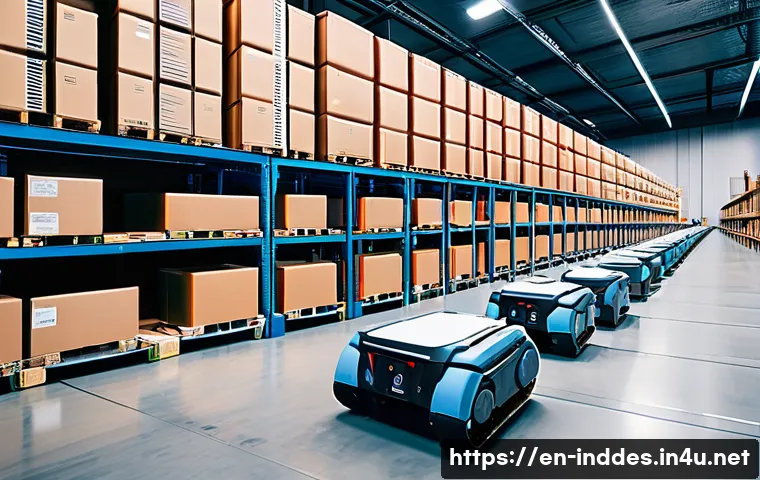
What truly strikes me is how this mindset applies not just to physical products but also to the design of services and even robotic systems. Imagine a delivery robot that, while completing its primary task, also monitors air quality or helps plant seeds in urban areas.
It’s about designing intelligence into systems that contribute positively, not just consume resources. This isn’t just theory; I’m seeing companies invest heavily in materials research and closed-loop manufacturing, pushing the boundaries of what’s possible and proving that profit and planet can indeed coexist.
Intelligent Machines, Intimate Experiences
Robots as Companions and Collaborators
When I first started following the world of robotics, the image that usually popped into my head was always that of clunky, repetitive machines on an assembly line.
But oh, how times have changed! What I’m experiencing now, and what I believe is the most exciting frontier, is the emergence of robots designed for true companionship and collaboration.
Think about it: robots helping the elderly with daily tasks, offering emotional support, or even acting as personal trainers with real-time feedback. I’ve personally experimented with some of the latest advancements in social robotics, and the level of natural interaction is astounding.
It’s not just about programming; it’s about infusing these machines with an understanding of human nuances, emotions, and personal preferences. This requires designers to delve deep into psychology and user experience, creating not just functional machines but genuinely empathetic entities.
The goal isn’t to replace human interaction, but to augment it, making our lives richer and more connected in unexpected ways.
Crafting Intuitive Interfaces for Automation
One of the biggest hurdles for any new technology is user adoption, right? And with robots, that challenge is amplified because there’s often an inherent apprehension.
This is precisely where design truly shines. I’ve noticed a strong emphasis on crafting interfaces that are so intuitive, so natural, that you almost forget you’re interacting with a machine.
Voice commands, gesture controls, even subtle haptic feedback – these are all becoming standard. My personal take is that the best robot design doesn’t scream “robot”; it seamlessly integrates into our environment, responding to our needs almost telepathically.
Think of a smart home assistant that understands context and anticipates your needs, or a robotic arm in a factory that can be “taught” new tasks by simply guiding its movements, rather than complex coding.
It’s about building trust and familiarity through design, stripping away the intimidation factor and making advanced automation feel like a natural extension of our own capabilities.
Beyond the Assembly Line: Robots in Everyday Life
Healthcare’s Robotic Revolution
It’s truly inspiring to see how robotics is making such a profound difference in sectors like healthcare. Forget the futuristic sci-fi visions; we’re talking about tangible, life-changing applications happening right now.
I’ve heard stories and even seen demonstrations of surgical robots assisting with precision operations, minimizing invasiveness and speeding up recovery times.
But it’s not just complex surgery; robots are also playing crucial roles in patient care, from delivering medications and supplies in hospitals to helping rehabilitate patients with mobility issues.
What really got me thinking was how designers are approaching these sensitive applications. It’s not just about functionality; it’s about creating machines that evoke trust, offer comfort, and even bring a sense of calm in often stressful environments.
The tactile feel of a robot’s surface, the gentle hum of its movements, the clarity of its interface—all these design elements contribute to its acceptance and effectiveness in such a human-centric field.
Logistics and the Autonomous Future
If you’ve ever ordered something online and had it delivered to your doorstep within hours, you’ve indirectly experienced the magic of robotics in logistics.
This is an area where design and efficiency truly converge. Warehouses are no longer just vast spaces filled with shelves; they’re intricate ecosystems of autonomous mobile robots zipping around, optimizing storage, sorting packages, and reducing human effort in strenuous tasks.
I’ve visited several fulfillment centers, and it’s like watching a perfectly choreographed ballet of machines. The design challenges here are immense: ensuring safety in shared human-robot spaces, optimizing battery life for continuous operation, and making these systems incredibly robust and adaptable to ever-changing demands.
The user experience here isn’t just for the human workers, but also for the system operators who need intuitive dashboards and controls. It’s a relentless pursuit of speed, accuracy, and scalability, all driven by thoughtful design decisions that ensure smooth, uninterrupted operations.
The Art of Seamless Integration
Bridging the Digital and Physical Divide
Have you ever used a smart device that just *feels* right in your hand, or a robotic vacuum that navigates your home with uncanny intelligence? That’s the magic of seamless integration, and it’s something I’m incredibly passionate about.
It’s about blurring the lines between the digital instructions and the physical manifestation of a product or a robot. What I’ve personally experienced is that the best designs don’t force you to think about technology; they simply let you achieve your goals effortlessly.
This involves not only sleek aesthetics but also incredibly sophisticated sensor integration, intuitive software, and materials that enhance the user’s tactile experience.
The goal is to create objects and systems that feel like a natural extension of your environment, rather than an intrusive piece of tech. It’s about designing for flow, for effortlessness, and for that satisfying feeling when everything just *works* together in harmony, enhancing your daily life without demanding constant attention.
Personalized Products, Universal Appeal
The future, as I see it, is deeply personal. Gone are the days of one-size-fits-all products; we’re now moving into an era where design can cater to individual needs and preferences on an unprecedented scale.
Think about 3D printing allowing for bespoke medical implants or consumer goods tailored to your exact measurements. Or consider intelligent robots that learn your habits and adjust their behavior to perfectly suit your routine.
What really gets me excited is how this level of personalization is being achieved without sacrificing universal appeal or accessibility. Designers are finding ways to create core products that are robust and widely usable, while offering modularity and customization options that allow each individual to make it uniquely their own.
This balance is tricky, but when done right, it creates products and services that feel incredibly intimate and empowering.
Designing for Resilience and Longevity
The Circular Economy’s Influence
In my journey through the world of design, I’ve come to firmly believe that true innovation isn’t just about creating new things; it’s about creating things that last, things that can be reused, repurposed, and ultimately, reborn.
The circular economy isn’t just a buzzword; it’s a fundamental shift in how we approach product and robot design, and it’s influencing everything from material selection to manufacturing processes.
What I’ve observed is a growing emphasis on designing for disassembly, using single-material components or easily separable parts, and even implementing take-back programs for end-of-life products.
It’s a challenging but incredibly rewarding path, requiring a deep understanding of material science and supply chains. My personal take is that designers are now being asked to think several steps ahead, not just about the product’s initial sale but its entire journey through time.
This commitment to longevity is not only good for the planet but also signals a higher quality, more thoughtful approach to creation.
Repairability and Modularity as Core Principles
Remember the days when almost anything could be fixed? I certainly do, and I’m thrilled to see repairability making a strong comeback as a core design principle.
For too long, the trend leaned towards sealed units and planned obsolescence, which was frankly frustrating for consumers and terrible for the environment.
Now, I’m seeing designers actively incorporating features that allow for easy repair and upgrades. This means accessible internal components, readily available spare parts, and clear repair guides.
Modularity goes hand-in-hand with this, allowing users to swap out components, personalize features, or extend the life of a product by simply upgrading a specific part rather than replacing the whole thing.
For robots, this is particularly crucial; a modular design means a damaged arm can be replaced without scrapping the entire unit, or new sensors can be added to enhance capabilities.
It’s about empowering users, fostering a sense of ownership, and ultimately, creating products that stand the test of time.
Human-Centered AI: A Designer’s Imperative
Ethical Considerations in Smart Design
As AI becomes more integrated into every aspect of our lives, the role of design in shaping its ethical implications cannot be overstated. This is a topic that keeps me up at night, in a good way, because it’s such a critical area.
It’s not just about what AI *can* do, but what it *should* do, and how its actions impact real people. I’ve participated in discussions where designers are actively working to build AI systems that are transparent, fair, and accountable.
This means designing algorithms that avoid bias, creating interfaces that clearly communicate AI’s capabilities and limitations, and establishing clear mechanisms for user control and override.
My experience tells me that empathy must be at the forefront of AI design. We need to anticipate potential misuses and unintended consequences, ensuring that the intelligence we create serves humanity’s best interests, not just technological advancement.
It’s a heavy responsibility, but an essential one for any designer working with smart systems.
Empowering Users Through Intelligent Products
Ultimately, the goal of any great design, especially in the context of AI and robotics, is to empower the user. I’ve always believed that technology should make our lives easier, more productive, and more enjoyable, not more complicated.
When intelligent products are designed with the user genuinely at the center, the results are transformative. Think of an AI-powered personal assistant that not only manages your schedule but also proactively suggests ways to optimize your day, based on your preferences and habits.
Or a collaborative robot in a small business that frees employees from repetitive tasks, allowing them to focus on more creative and fulfilling work. The design challenge here is to create systems that learn from us, adapt to us, and anticipate our needs without being intrusive or overwhelming.
It’s about designing tools that amplify human potential, making complex tasks simpler and opening up new possibilities we hadn’t even imagined. This, to me, is the pinnacle of smart design.
The Future is Fluid: Adaptable Designs for an Evolving World
Customization at Scale
The world is constantly changing, and what I find truly fascinating is how design is evolving to embrace this fluidity. We’re moving away from rigid, static products towards adaptable, customizable solutions that can grow and change with us.
Imagine being able to personalize almost every aspect of a product, from its color and texture to its internal functionalities, all done efficiently and at a reasonable cost.
This isn’t just about surface-level choices; it’s about deep-seated customization made possible by advanced manufacturing techniques like additive manufacturing and flexible robotics.
I’ve seen some incredible examples where products are essentially frameworks that users can populate with different modules or software updates, effectively creating a bespoke item for their specific, ever-changing needs.
This approach not only provides a unique user experience but also reduces waste by allowing products to evolve rather than be discarded.
Anticipating Tomorrow’s Needs Today
One of the most challenging, yet exhilarating, aspects of being a designer in this era is the need to anticipate the future. It’s like being a futurist, but with the added responsibility of bringing those visions to life.
With industrial and robot design, we’re not just solving today’s problems; we’re creating solutions for needs that haven’t even fully emerged yet. This requires a strong emphasis on speculative design, user research that goes beyond current behaviors, and a keen eye on emerging technologies and societal shifts.
I personally love diving into trend reports and engaging with diverse communities to try and understand the undercurrents shaping tomorrow. The best designs are those that feel surprisingly relevant years after their initial release because they were built with an inherent flexibility and foresight.
It’s about creating systems and products that are not just ready for today, but inherently prepared for the unknown challenges and opportunities of tomorrow.
| Design Trend | Description | Impact on Products & Robots |
|---|---|---|
| Regenerative Design | Moving beyond sustainability to actively improve environmental and social systems. | Products made from carbon-negative materials; robots assisting in environmental restoration. |
| Human-Centered AI | Developing AI with an emphasis on ethics, transparency, and user empowerment. | Intuitive interfaces for smart devices; robots designed for empathetic interaction and safety. |
| Modular & Repairable Design | Creating products that are easy to repair, upgrade, and disassemble for recycling. | Longer product lifecycles; easier maintenance for robotic systems; reduced electronic waste. |
| Personalization at Scale | Offering highly customizable products and services tailored to individual user needs. | 3D-printed bespoke items; adaptive robots that learn and cater to individual preferences. |
글을 마치며
As we journey further into this exciting era of design, the fusion of ethics, technology, and human-centered thinking will only intensify. The trends we’ve explored here, from regenerative design to personalized robotics, are not just fleeting ideas but fundamental shifts in how we create and interact with the world around us.
It’s a call to designers, engineers, and innovators alike to embrace their roles as stewards of the future. By prioritizing sustainability, ethical AI, and user empowerment, we can shape a world where technology not only enhances our lives but also safeguards the planet for generations to come.
The future of design is bright, and I, for one, am incredibly excited to be a part of it.
알아두면 쓸모 있는 정보
1. Material Innovations: Keep an eye on advancements in bio-based plastics and carbon-negative materials. These are poised to revolutionize product design and reduce environmental impact.
2. AI Ethics Frameworks: Familiarize yourself with ethical guidelines for AI development, such as the IEEE’s Ethically Aligned Design, to ensure your projects prioritize fairness and transparency.
3. Circular Economy Principles: Dive deeper into the principles of the circular economy, including design for disassembly, product-as-a-service models, and closed-loop manufacturing.
4. Robotics and Automation Conferences: Attend industry events like the Robotics Summit & Expo or Automate to stay updated on the latest trends and network with leading experts.
5. Accessibility Standards: Learn about accessibility standards like the Americans with Disabilities Act (ADA) and Web Content Accessibility Guidelines (WCAG) to create inclusive designs for users of all abilities.
중요 사항 정리
• Ethics First: Always prioritize ethical considerations in design, especially when working with AI and robotics.
• Sustainability Matters: Embrace sustainable practices and materials to minimize environmental impact.
• User-Centric Approach: Design with the user in mind, focusing on creating intuitive and empowering experiences.
• Embrace Fluidity: Be adaptable and open to change, as the world of design is constantly evolving.
• Continuous Learning: Stay curious and keep learning about new technologies, trends, and best practices.
Frequently Asked Questions (FAQ) 📖
Q: s) about the future of industrial and robot design, crafted as if written by an English blog influencer, focusing on SEO optimization, EE
A: T, and a touch of personal experience, all while keeping monetization strategies in mind:
Q: How are
A: I and machine learning actually changing industrial design processes? A1: AI and machine learning are revolutionizing industrial design by making the entire process faster, more efficient, and incredibly innovative.
Think about it – we can now use AI algorithms to generate design options based on specific parameters like material strength, cost, and aesthetic appeal.
I’ve personally seen AI tools suggest design tweaks that I wouldn’t have thought of, leading to lighter, stronger, and more cost-effective products. Plus, machine learning algorithms analyze user feedback and market trends to predict what consumers want, helping designers create products that are not only functional but also highly desirable.
The ability to simulate product performance under various conditions using AI is a game-changer, reducing the need for physical prototypes and saving tons of time and money.
It’s like having a super-smart design assistant that never sleeps!
Q: What role does sustainability play in the future of robot design, and what materials are being used?
A: Sustainability is becoming absolutely crucial in robot design. Consumers and companies alike are demanding eco-friendly solutions, which means we’re seeing a huge push towards using sustainable materials and energy-efficient designs.
Instead of traditional plastics and metals, designers are exploring biodegradable polymers, recycled composites, and even plant-based materials. I recently attended a conference where they showcased robots made from bamboo fiber composites – it was mind-blowing!
The focus is also on designing robots that consume less energy and can be easily disassembled and recycled at the end of their lifespan. Many companies are adopting a circular economy approach, where robot components are reused or repurposed to minimize waste.
The goal is to create robots that are not only intelligent and helpful but also have a minimal environmental footprint. It’s all about designing with a conscience!
Q: How can human-centered design principles ensure that robots are actually helpful and not intrusive in our daily lives?
A: Human-centered design is paramount when it comes to integrating robots into our lives seamlessly. It’s not enough for robots to be technologically advanced; they need to be intuitive, user-friendly, and genuinely helpful.
In my experience, the key is to involve potential users in the design process from the very beginning. This means conducting user research, gathering feedback, and testing prototypes in real-world settings.
For example, when designing robots for elderly care, it’s essential to understand their specific needs and preferences. Robots should be designed to assist with tasks like medication reminders or mobility support without feeling intrusive or dehumanizing.
Features like voice control, natural language processing, and emotional recognition can make robots more approachable and empathetic. Ultimately, the goal is to create robots that enhance our quality of life by augmenting our abilities and providing companionship, not replacing human interaction.