Stepping into any modern space, you instantly feel the invisible hand of industrial design shaping your experience – the satisfying click of a well-made gadget, the intuitive flow of a public transit system.
But lately, a profound shift has been unsettling the very foundations of how we create. From my own studio, I’ve seen the conversation pivot from mere aesthetics and functionality to a far more urgent question: where does all this stuff go when we’re done with it?
This isn’t just a fleeting trend; zero waste design is rapidly becoming the moral imperative for every product developer, pushing us to innovate with circularity in mind from the get-go.
We’re moving beyond simple recycling, delving into advanced material science, exploring ‘product-as-a-service’ models, and championing ‘design for disassembly.’ Honestly, it feels like the entire industry is collectively realizing the immense responsibility we bear.
The future of design isn’t just about making beautiful objects; it’s about designing entire ecosystems where waste is simply an outdated concept, a valuable resource waiting to be reused.
It’s a challenge, sure, but also a massive opportunity to redefine value. Let’s delve into the specifics.
Shifting Paradigms: Beyond Linear Consumption

Honestly, for years, the design world was comfortably nestled in a “take-make-dispose” mindset. You’d sketch, prototype, produce, and then… well, the product was out of sight, out of mind.
But my own journey, watching countless brilliant designs contribute to growing landfills, felt increasingly hollow. This isn’t just about feeling good; it’s about a fundamental re-evaluation of how we create and consume.
The global appetite for new stuff is insatiable, and the planet simply can’t keep up with our current linear model. It’s a stark reality check that has truly shaken up the industry, prompting us to ask tougher questions at every stage of the design process.
We’re no longer just problem-solvers for immediate needs, but stewards of future resources.
The End of “Take-Make-Dispose”
The traditional linear economy, where raw materials are extracted, transformed into products, used, and then discarded, has served us for centuries. However, the environmental and social costs have become devastatingly clear.
From vast stretches of land scarred by mining to oceans choked with plastic, the evidence is undeniable. I remember working on a project years ago, so focused on the aesthetic appeal of a product, that I barely considered its end-of-life.
It’s embarrassing to admit now, but it was the industry standard. We celebrated sleek lines and innovative functionalities, but the conversation rarely extended to what happened *after* the consumer was done with it.
Now, the shift is palpable. Designers, myself included, are almost instinctively thinking: “Where will this material come from? How long will it last?
What happens when it’s no longer needed?” It’s a challenging mental leap, requiring us to embrace a much wider, more complex view of a product’s entire journey.
Embracing Circularity in Practice
Moving from a linear to a circular model means designing products, processes, and systems that minimize waste and maximize resource efficiency. This isn’t just theory; it’s about getting granular.
It means materials are kept in use for as long as possible, whether through repair, reuse, refurbishment, or recycling. Think about it: a component designed for easy replacement, a product intended to be upgraded rather than discarded, or even materials that can be safely composted.
I’ve been personally experimenting with modular design in my studio, creating pieces where elements can be swapped out or updated, extending the lifespan significantly.
It’s less about one-off creations and more about building relationships between materials and their potential future lives. The beauty is that this approach isn’t just better for the planet; it often leads to more resilient, adaptable, and ultimately, more valuable products for the consumer.
Materials Matter: Innovation at the Core
When I first started in design, material selection was often a choice between aesthetics, durability, and cost. Now, it’s an intricate dance involving environmental impact, source transparency, recyclability, and even regenerative potential.
It’s exhilarating, but also incredibly complex, requiring a deep dive into material science that was once reserved for engineers. The truth is, without a profound shift in how we think about and use materials, ‘zero waste’ remains a pipe dream.
We’re talking about everything from biomaterials grown in labs to ancient techniques re-evaluated for modern applications. The potential for innovation here is just immense, and it’s where many of the most exciting breakthroughs in sustainable design are happening right now.
The Power of Regenerative Resources
The idea of materials that not only cause no harm but actually *restore* ecological systems feels almost utopian, doesn’t it? But it’s becoming a tangible reality.
We’re seeing a push towards regenerative agriculture producing materials like industrial hemp or flax, which can sequester carbon, improve soil health, and require fewer pesticides.
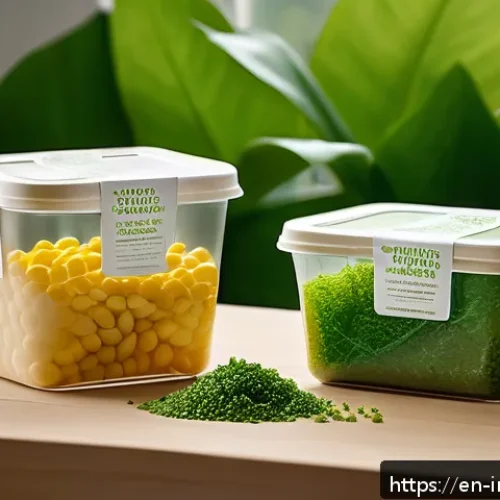
Then there are truly groundbreaking innovations like mycelium (mushroom-based) composites, which can replace polystyrene foam and biodegrade completely.
I’ve held mycelium packaging in my hands, and the thought that this natural, grown material could replace harmful plastics is just mind-blowing. It feels like science fiction coming to life.
This isn’t just about finding alternatives; it’s about redefining what a “resource” truly is and embracing nature’s own cyclical processes as our ultimate design guide.
It fundamentally changes our relationship with the earth, moving from extraction to cultivation.
Designing for Disassembly and Re-Entry
This is where the rubber meets the road for circular design. If a product can’t be easily taken apart at the end of its life, its components can’t be reused, repaired, or properly recycled.
It’s a simple concept that has profound implications for product architecture. I’ve spent countless hours trying to pry apart products that were glued or fused together, realizing just how much waste is baked into those “permanent” connections.
Now, my priority is to design with clear end-of-life pathways. This means using mechanical fasteners instead of adhesives, standardizing components where possible, and even labeling materials for easy identification during sorting.
It also means thinking about the future value of a material – will it retain its quality if recycled? How many times can it go through the loop? Here’s a quick overview comparing traditional vs.
circular design approaches:
| Design Aspect | Traditional Linear Design | Zero Waste Circular Design |
|---|---|---|
| Material Sourcing | Virgin, often non-renewable, cheapest option wins | Recycled, renewable, regenerative, locally sourced |
| Manufacturing Process | Energy-intensive, waste by-products, single-use mindset | Low-energy, minimal waste, closed-loop systems, modularity |
| Product Lifespan | Designed for obsolescence, short-term use | Designed for durability, repair, upgrade, multiple lifecycles |
| End-of-Life | Landfill or incineration | Disassembly, reuse, recycling, composting, material recovery |
| Value Proposition | Possession, newness, low upfront cost | Performance, service, long-term value, environmental impact |
Products as Services: A New Economic Model
The concept of “product-as-a-service” feels like a radical departure from traditional consumerism, but it’s quickly gaining traction and for good reason.
It shifts the focus from owning an object to gaining access to its function. Think about it: why buy a drill you’ll use once a year when you can pay for the “drilling service” for that brief period?
This model fundamentally changes the incentives for manufacturers and designers, aligning their goals with longevity and resource efficiency rather than endless sales of new units.
It’s exciting because it forces a different kind of innovation, one centered on enduring value.
From Ownership to Access
I’ve seen firsthand how this model works, especially with high-value or infrequently used items. Instead of purchasing an expensive piece of equipment that might sit idle most of the time, businesses and even individuals can subscribe to its use.
This means the manufacturer retains ownership and, crucially, responsibility for the product’s entire lifecycle. For instance, companies like Philips offer “light-as-a-service,” where you pay for the light, not the bulbs.
This completely changes their incentive; suddenly, they want to produce the most energy-efficient, longest-lasting lights possible because they bear the cost of maintenance and replacement.
It’s a revelation! As a designer, this pushes me to think about modularity, ease of repair, and even predictive maintenance from the get-go, knowing the product will come back to me, or my client, for servicing.
It transforms a disposable item into a circulating asset.
Longevity, Maintenance, and Value Retention
When a company profits from a product’s ongoing use rather than its initial sale, their entire strategy pivots. The product is no longer just a transaction; it’s an investment in a long-term relationship.
This means designing for extreme durability, easy repair, and straightforward upgrades becomes paramount. My personal approach to designing furniture, for example, has shifted dramatically.
I’m now less concerned with ephemeral trends and more focused on timeless aesthetics and robust construction that can withstand decades of use, knowing that its value lies in its continued function.
We’re seeing companies offer take-back schemes for clothing, furniture, and even electronics, ensuring that materials are recaptured and put back into circulation.
It’s a brilliant way to keep resources flowing and reduce the demand for new virgin materials, and it genuinely excites me about the future of product use.
Overcoming the Greenwashing Hurdle
As someone deeply invested in truly sustainable design, nothing frustrates me more than “greenwashing.” It’s the deceptive marketing practice used by companies to promote the perception that their products, aims, or policies are environmentally friendly.
In our rush towards a more sustainable future, it’s easy for consumers to be misled by vague claims and buzzwords. My experience tells me that genuine sustainability needs to be backed by verifiable data and transparent processes, not just pretty packaging or an eco-friendly-sounding name.
It’s a critical challenge because it erodes trust and undermines the efforts of genuinely committed designers and businesses.
Authenticity in Eco-Design
True eco-design isn’t a marketing slogan; it’s embedded in every decision, from raw material sourcing to manufacturing processes and end-of-life planning.
When I’m evaluating a product or a material, I look beyond the surface. Is there a clear supply chain? Are certifications from reputable third parties available?
Does the company have a measurable, public commitment to reducing its environmental footprint? These are the questions we, as designers and informed consumers, must ask.
It’s about substance over hype. I’ve seen projects where the initial brief was “make it green,” but the client wasn’t willing to invest in truly sustainable materials or processes.
It’s a constant battle, but advocating for authentic, impactful change is what drives me. It’s not about being perfectly green; it’s about transparently striving for better, every single day.
Consumer Education and Transparency
Ultimately, combating greenwashing relies heavily on empowering consumers with knowledge. We, as designers and influencers, have a responsibility to educate our audience.
This means simplifying complex information about material lifecycles, manufacturing impacts, and ethical sourcing, so people can make informed choices.
It’s not about wagging a finger; it’s about providing clarity. Imagine a QR code on every product that links to its full material breakdown, its carbon footprint, and its end-of-life recycling instructions.
That’s the level of transparency we should be pushing for. I genuinely believe that when people understand the true impact of their purchases, they are more likely to support businesses that are genuinely committed to sustainability, driving systemic change from the demand side.
The Human Element: Designers as Advocates
Beyond the technicalities of materials and systems, the human element in zero-waste design is perhaps the most critical. It’s about cultivating a specific mindset, not just within the design community, but throughout the entire value chain.
We’re not just creators of objects; we’re also educators, strategists, and advocates for a fundamentally different way of interacting with our planet.
My work increasingly involves speaking not just about aesthetics, but about ethics, responsibility, and the long-term impact of every decision. It feels like a much heavier burden, but also a far more meaningful one.
Cultivating a Mindset of Responsibility
This shift isn’t just about learning new software or materials; it’s about a profound psychological change. It means moving away from a consumerist, disposable mentality to one that values longevity, resourcefulness, and circularity.
As designers, we are uniquely positioned to shape this mindset because we craft the objects and experiences that people interact with daily. Every design choice, however small, sends a message.
When I design a product that is easily repairable, I’m subtly teaching the user about maintenance and longevity. When I choose recycled content, I’m reinforcing the value of circularity.
It’s a continuous learning curve, even for me. I often find myself questioning my own ingrained habits and biases when approaching a new project, pushing myself to think beyond the immediate brief and consider the broader ecological impact.
Collaborating for Systemic Change
No single designer, company, or even industry can tackle the immense challenge of waste alone. Real zero-waste design requires deep collaboration across disciplines and sectors.
This means designers talking to material scientists, engineers collaborating with policy makers, and businesses partnering with recycling infrastructure.
I’ve been involved in multi-stakeholder workshops where the insights from a logistics expert completely reshaped my design approach for packaging, showing me that the solution wasn’t just about the material, but how it moved through the supply chain.
It can be messy and challenging, trying to get so many different perspectives aligned, but it’s absolutely essential. We have to break down silos and embrace a collective responsibility if we want to move beyond incremental improvements to truly systemic, transformative change.
The future is collaborative, or it’s not truly sustainable.
Future Forward: Policy, Tech, and The Next Wave
Looking ahead, the trajectory of zero-waste design is heavily influenced by two powerful forces: evolving policy frameworks and rapid technological advancements.
What was once seen as a niche, eco-conscious movement is quickly becoming mainstream, driven by consumer demand, corporate responsibility, and increasingly, governmental mandates.
I feel incredibly optimistic about the pace of change, yet also acutely aware of the huge amount of work still to be done. The next wave of innovation in circularity will be a fascinating blend of top-down regulation and bottom-up ingenuity.
Regulatory Support and Incentives
Governments worldwide are starting to implement policies that actively support circular economy principles. Extended Producer Responsibility (EPR) schemes, for example, hold manufacturers accountable for the entire lifecycle of their products, incentivizing them to design for durability and recyclability.
There are also emerging policies around digital product passports, making information about a product’s materials and recyclability readily available.
I’ve seen how these regulations, while sometimes initially met with resistance, can be powerful catalysts for innovation. They create a level playing field and push entire industries to adopt more sustainable practices.
It removes the competitive disadvantage for businesses that genuinely want to do good, as everyone is then held to a higher standard. It’s a critical piece of the puzzle, ensuring that circularity isn’t just a choice, but a default.
AI, Big Data, and Predictive Waste Management
The role of technology in accelerating zero-waste initiatives cannot be overstated. Artificial intelligence and big data analytics are poised to revolutionize how we track materials, optimize recycling processes, and even predict waste streams.
Imagine AI-powered sorting facilities that can perfectly separate mixed plastics, or algorithms that match discarded materials with new manufacturing demands in real-time.
We’re even seeing predictive maintenance, where sensors in products alert us to potential issues before they become major problems, extending product life and reducing premature waste.
I’m actively exploring how data visualization can help designers better understand the true environmental footprint of their material choices before a single prototype is even made.
This convergence of design, policy, and cutting-edge technology gives me immense hope that a truly waste-free future isn’t just a dream, but an achievable reality.
The momentum is building, and I’m genuinely thrilled to be a part of it.
Wrapping Up
As I look back on my journey in design, it’s truly incredible to see how far we’ve come, and how much further we still have to go. Zero-waste design isn’t just a trend; it’s a fundamental re-imagining of our relationship with the planet and the things we create.
It’s a challenging, exhilarating path that demands continuous learning, collaboration, and a deep sense of responsibility. But honestly, the shift I’m witnessing, from designers to consumers, gives me immense hope.
Let’s keep pushing these boundaries together, transforming aspiration into tangible, beautiful reality, one conscious design choice at a time.
Useful Information to Know
1. Dive into Reputable Resources: For a deeper understanding of circularity, explore organizations like the Ellen MacArthur Foundation or resources like Project Drawdown. They offer incredible insights and data that can truly shift your perspective.
2. Look for Key Certifications: When buying, keep an eye out for third-party certifications like Cradle to Cradle, B Corp, or certifications specific to materials (e.g., FSC for wood, GOTS for organic textiles). These aren’t perfect, but they’re a good indicator of a company’s commitment to sustainability.
3. Support Local Repair Initiatives: Before discarding, check if there’s a local Repair Cafe or a skilled artisan who can mend your items. Extending a product’s life is often the most impactful zero-waste action you can take.
4. Ask Brands Tough Questions: Don’t hesitate to inquire about a product’s full lifecycle – where materials come from, how they’re processed, and what happens at the end of its life. Your questions drive demand for transparency!
5. Start Small, But Start Now: You don’t have to overhaul your entire life overnight. Begin with small changes, like choosing reusable bags, composting food scraps, or simply thinking twice before making a new purchase. Every step truly counts!
Key Takeaways
Zero-waste design is a powerful paradigm shift, moving us from a linear ‘take-make-dispose’ model to a circular one that values every resource. It’s about innovative materials, designing for longevity and disassembly, and embracing ‘products as a service.’ Crucially, it demands authenticity over greenwashing, advocating for change, and fostering cross-sector collaboration.
With policy support and technological advancements, a truly waste-free future is within our grasp – and designers are at the heart of making it happen.
Frequently Asked Questions (FAQ) 📖
Q: What’s the single biggest hurdle designers and companies face when trying to implement zero-waste principles into their products?
A: From my own conversations and the relentless brainstorming sessions in my studio, I’d say the absolute toughest nut to crack is the shift in mindset – both internally within a company and externally with consumers.
We’re so conditioned to a linear ‘take-make-dispose’ model, it’s like trying to untangle decades of ingrained habit. I’ve personally wrestled with clients who, bless their hearts, get the ‘why’ but then balk at the upfront investment.
“It’s going to cost that much more for this recycled plastic, or this modular system?” they’ll ask, eyes wide. It’s not just about the material cost; it’s redesigning supply chains, retooling factories, and sometimes even completely rethinking how a product is sold and then taken back.
That paradigm shift from “cheapest possible” to “most circular possible” is a steep climb for everyone involved, and it requires a real leap of faith.
Q: You mentioned moving “beyond simple recycling.” How exactly does zero-waste design go further than just putting items in the blue bin?
A: Ah, this is where it gets really exciting, and honestly, where the genuine innovation lies! Simple recycling, while absolutely necessary, is often a downcycling process – that perfectly good plastic bottle often becomes something lesser, like a park bench, and then that’s its end.
Zero-waste design, or circular design as we often call it, demands we think upstream. It’s not about what happens after you’re done with it, but about designing the entire life cycle from day one.
I’m talking about specifying materials that are either infinitely recyclable without degradation, or better yet, truly compostable or biodegradable without leaving harmful residues.
It’s ‘design for disassembly,’ where a product can be easily taken apart to recover high-value components. And it’s ‘product-as-a-service,’ where you don’t own the object, but rather lease its function – think of companies leasing out carpet tiles or even industrial light fixtures, taking them back for refurbishment when their service life is up.
It means every screw, every circuit board, every fabric swatch is considered for its next life, right from the first sketch. It’s a complete philosophical overhaul of how we make stuff.
Q: Can you give me a real-world example of zero-waste design I might encounter or benefit from in my daily life that truly embodies these principles?
A: Absolutely! While still gaining traction, you’re increasingly seeing it in some really cool places. One great example hitting mainstream awareness is in packaging, especially in the food and beverage industry.
Think about those local coffee shops that are starting to offer sturdy, reusable cups that you pay a small deposit for, use, and then return at any participating shop for a clean one.
It’s not just “bring your own mug” (which is great, don’t get me wrong), but a whole system designed for reuse, often cleaned industrially for hygiene and efficiency.
Another space where I’m seeing real traction is in furniture or even some tech gadgets that are genuinely modular. Imagine a couch where you can easily swap out a worn cushion cover, or even a broken armrest, without needing to throw out the entire piece.
Or a smartphone designed so the battery and screen are easily replaceable, extending its useful life by years. It’s about building in longevity and repairability, making it effortless to keep the product in circulation, rather than sending it to a landfill.
It’s less about a grand gesture and more about those quiet, intelligent choices that make sense, both environmentally and economically.
📚 References
Wikipedia Encyclopedia
구글 검색 결과
구글 검색 결과
구글 검색 결과
구글 검색 결과
구글 검색 결과